

Engineering the Perfect Texture: The Science of Alkaline Noodle Production
Introduction
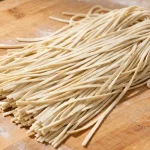
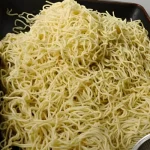
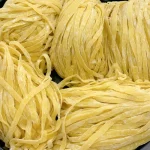
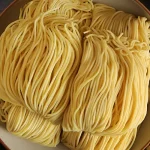
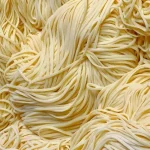
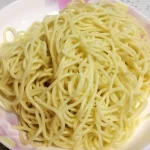
Alkaline noodles—such as Chinese-style jian mian, Lanzhou lamian, Wuhan re-gan-mian, Guangdong zusheng noodles, or Japanese ramen noodles—are defined by their firm, springy texture and characteristic pale-yellow hue. Achieving these professional results depends on how your equipment manages the specific chemical and physical changes triggered by alkaline salts.
1. The Chemistry of Alkalinity: Beyond the Recipe
The addition of Kansui (alkaline salts) raises the pH level of the dough, creating several critical changes that the production line must handle:
- Gluten Strengthening: The alkaline environment significantly tightens the protein network. This results in a dough that is much tougher and offers higher resistance during the sheeting process compared to standard wheat dough.
- Aroma & Color: The reaction between the alkali and the flour’s natural flavonoids creates the iconic yellow tint and the specific earthy, alkaline aroma that defines authentic ramen.
2. Critical Equipment Requirements
A. Conventional Mixing for Homogeneity
For the hydration levels typically used in alkaline noodles, a Conventional Dough Mixer is the standard and most effective solution.
- Efficient Distribution: These mixers provide the necessary shear force to ensure the alkaline solution is distributed evenly throughout the flour. This prevents “hot spots” (uneven yellowing) and ensures a consistent crumbly texture before it enters the rollers.
B. Anti-Corrosive Hardened Stainless Steel Rollers
Equipment durability is the primary concern when dealing with high-pH dough. Alkaline solutions are naturally reactive and can cause long-term damage to inferior materials.
- Corrosion Resistance: We utilize hardened, food-grade stainless steel rollers across our entire range. Unlike standard carbon steel, which may pit or oxidize over time, stainless steel ensures a pristine, uncontaminated production environment and a much longer equipment lifespan.

C. Versatile Pressure Handling
Because alkaline dough is remarkably “stiff,” the rollers and drive systems must be robust enough to maintain a constant gap under pressure.
- Precision Control: Whether your setup uses 4, 6, or 8 stages, our rollers are engineered for stability. While high-capacity 7-8 stage systems offer the most gradual reduction↗ (optimizing texture at high speeds), our more compact lines are equally reinforced to handle the increased tension of alkaline production.
3. The Production Workflow
- Consistent Mixing: Utilizing a high-torque conventional mixer to integrate the alkaline solution.
- Dough Aging: A critical resting period↗ that allows the pH to stabilize the gluten network.
- Calibrated Sheeting: Passing the dough through reinforced rollers to reach the final desired thickness.
- Uniform Slitting: Cutting with precision-milled slitters to ensure consistent strand dimensions and cooking times.
👉 Also read Industrial Noodle Processing Workflow↗
4. Technical Specifications Summary
| Feature | Alkaline Production Requirement | Our Engineering Solution |
| Mixing Method | Conventional Mixing | High-torque, uniform integration |
| Roller Material | Chemical Resistance | Full hardened stainless steel |
| Dough Texture | Tough & Elastic | Reinforced chassis & stable roller gaps |
| Scalability | Small to Large Scale | Flexible configurations (4 to 8+ Stages) |
Frequently Asked Questions
Industry Insight: The Science & Market of Alkaline Noodles
The Science Behind the Color: Why Do They Turn Yellow?
A common question from new manufacturers is why the dough changes color without the addition of eggs or dyes.
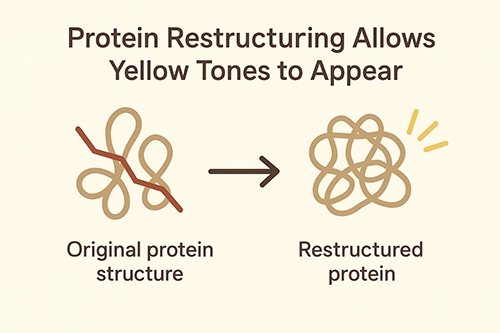
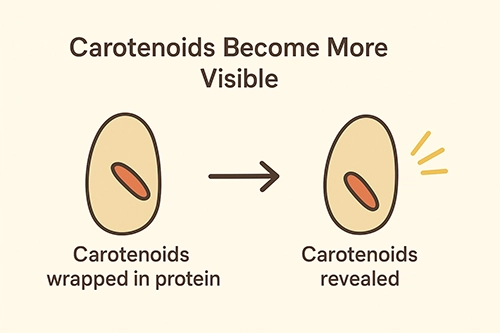
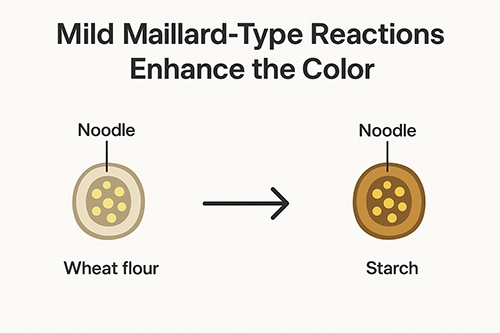
- Natural Pigment Activation: Wheat flour contains colorless pigments called flavonoids. When the pH level is raised by Kansui (alkaline salts), a chemical reaction occurs that turns these flavonoids yellow.
- The “Double Benefit”: This reaction doesn’t just change the color; it’s the same chemical bond that tightens the gluten, creating that signature “snap” that prevents the noodle from becoming soggy in hot broth.
Global Market Potential: Where These Lines Are Dominant
Understanding the popularity of alkaline noodles helps in choosing the right production capacity. Our clients typically target these key markets:
- Japanese Ramen & Chinese Lamian: The largest industrial sectors requiring high-precision 300-500kg/h lines.
- Southeast Asian Varieties: Essential for dishes like Malaysian Hokkien Mee or Thai Ba Mee, where the noodles must withstand stir-frying heat without breaking.
- The Global “Ramen Boom”: With the rise of gourmet instant and frozen ramen in Western markets, having an industrial line that can produce authentic alkaline textures is currently a high-ROI investment.
👉 Also read Why Alkaline noodles are safe and healthy↗
📌 Let’s Assist You
Ready to Enter the Global Ramen Noodle Market? From the science of color to the precision of the final cut, we provide the technology to make your alkaline noodle production↗ a success.
Email directly: info@NoodleMachinePro.com


Talk to Zhou on Wechat
Scan the code to add
Or, if you prefer, simply fill out our Contact Form and tell us your production goals.
We’ll get back to you with a tailored recommendation within 24 hours.


